We built the hardware we wished existed
Q-Factor started because three physicists were tired of losing a third of each research week to manual recalibration. Founded in Tel Aviv in 2025, we are building the neutral-atom platform that stays calibrated between every run.
Make quantum hardware that works reliably, today
The quantum computing field has made extraordinary progress in gate fidelity and qubit count. What has not kept pace is operational reliability. Real experiments are interrupted constantly by drift, decoherence from environmental perturbations, and the slow, manual calibration process that follows each disruption.
Q-Factor's thesis is straightforward: AI-assisted closed-loop calibration can close this gap. If a system continuously monitors its own state and corrects for drift automatically, experimental sessions can run for hours without human intervention. That changes what is possible for a research group on a budget, for a startup trying to validate a quantum algorithm, and eventually for fault-tolerant computation.
We started with the hardest part first: building a neutral-atom array that actually keeps its calibration. Everything else follows from that.
Q-Factor founded in Tel Aviv. First optical tweezer array assembled and operated in the founding lab.
50-atom baseline system operational. AI calibration loop running continuously for the first time.
100+ qubit configuration. First external research partners onboarded for early-access program.
Founders and core team
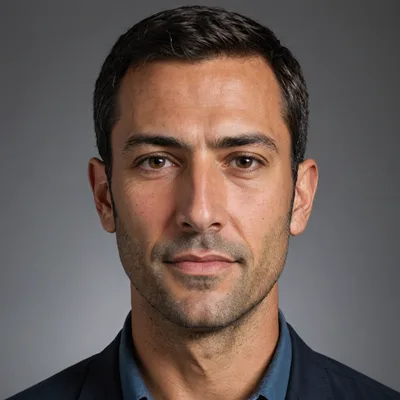
Guy's background is in experimental AMO physics, where he spent years running neutral-atom experiments. What drove him to start Q-Factor was a specific and recurring frustration: calibration drift was consuming roughly a third of every experimental week, time that could not be recovered by working harder or smarter. The problem was in the hardware architecture, not the workflow. At Q-Factor, he oversees strategy and leads hardware integration.
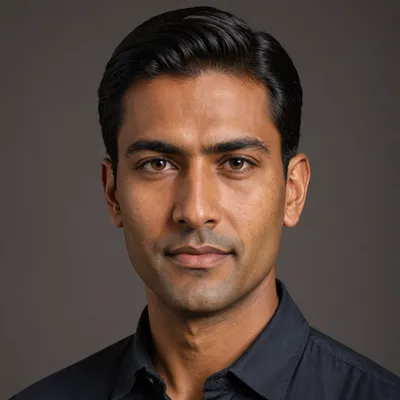
Arjun's background is in atomic physics, with deep focus on Rydberg excitation dynamics and two-qubit gate optimization. He has spent years designing and characterizing optical tweezer trapping geometries, work that gave him both the knowledge base and the motivation to build a system where high fidelity translates into reliable experimental throughput. At Q-Factor, he leads qubit characterization and gate development.
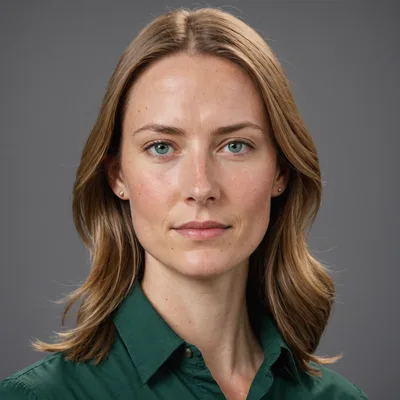
Lena's background bridges quantum optics hardware and real-time control software. She has built closed-loop control systems for precision optical instruments in research settings, which is exactly the problem class at the core of Q-Factor's calibration layer. She brings a systems-engineering perspective to a domain that has historically relied on physicists doing calibration by hand. At Q-Factor, she leads software, AI model development, and systems integration.
Work with us or talk to the team
We are actively onboarding early-access research partners. Reach out to discuss hardware access, collaboration, or just to say hello.